
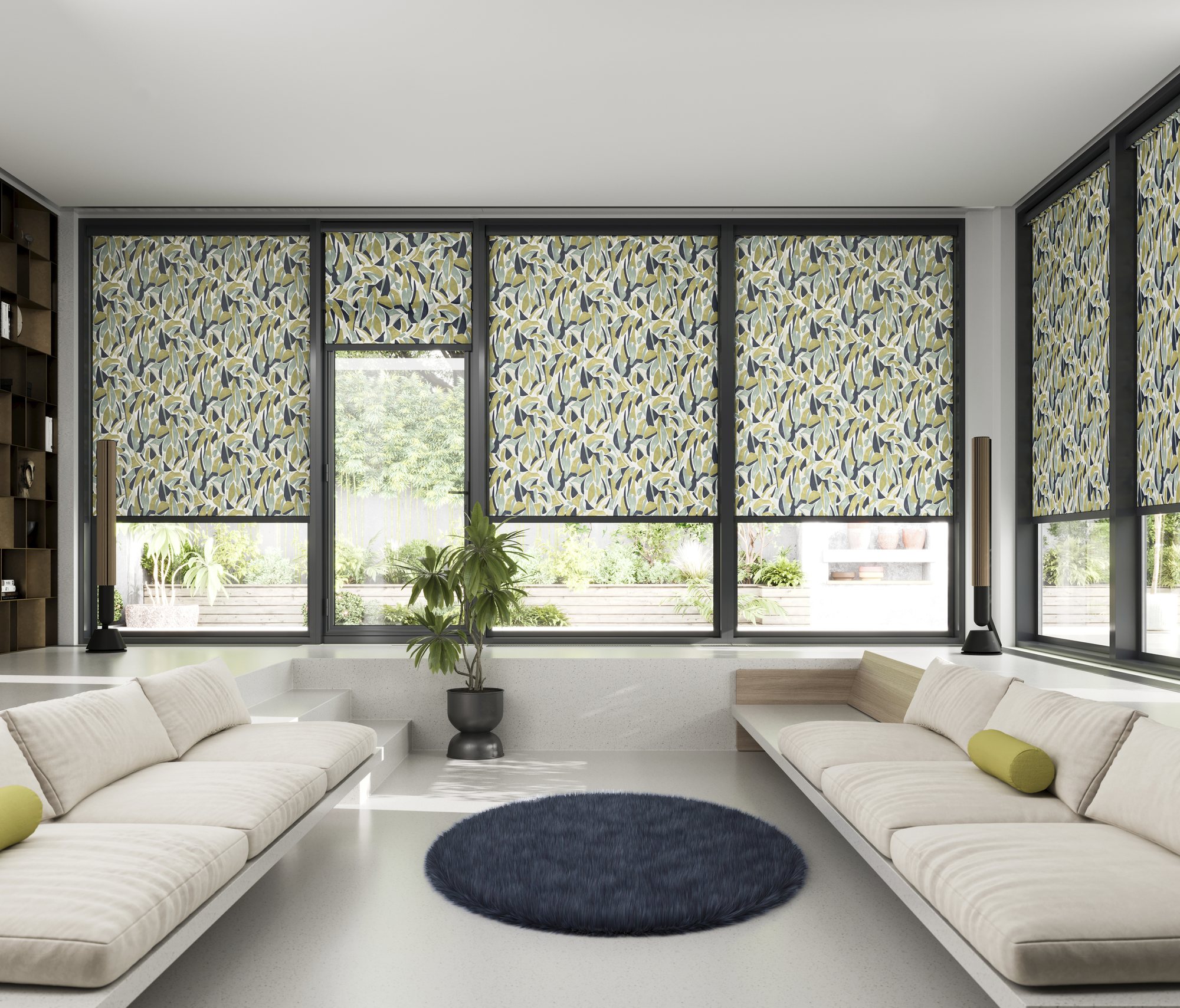
Vertical blinds are usually the simplest
If the track opens, closes and tilts smoothly, replacement louvres can often refresh a vertical blind without replacing the headrail. The existing slat length, width, hanger style and weights need to be checked.
A new fabric can also change the room's performance - for example, moving from a standard fabric to blackout or a wipe-clean finish - but the result still depends on the condition of the existing track.
Roller blinds need compatible tubes and controls
A roller cloth is attached to a tube and balanced with the correct control and bottom bar. Re-covering may be possible, but once labour and updated safety components are included, a complete made-to-measure blind can offer better value and a more reliable warranty.
Roman blinds are more involved
Roman blinds contain lining, pockets, rods, cords and a headrail. A skilled maker may reuse a suitable headrail, but the new fabric still needs to be made as a complete blind panel. Pattern placement and finished weight also affect operation.
Check safety and warranty before reusing parts
Older hardware may not meet current child-safety requirements or may be too worn to justify reuse. Ask for the replacement and complete-blind costs side by side, together with the warranty on each option.
- Blind type and size
- Age of the hardware
- Condition of controls
- Current safety compliance
- Cost difference
- Warranty offered
Frequently asked questions
Can I put blackout fabric on my existing vertical blind?
Often, yes, if the track is serviceable and the replacement louvres are made to the correct size and hanger type.
Can a roller blind be cut down and reused?
It is sometimes technically possible, but the fabric, tube, brackets and spring or chain system must all remain correctly matched. A survey is recommended.
Will replacement fabric have a warranty?
Warranty terms vary by product and whether existing components are reused. Ask for the coverage in writing with the quotation.